“You Get It?” — Key EQ Skills for SaaS Solution Engineers
Listening as Foundation
Human communication is sometimes clear, sometimes veiled. Great Solution Engineers are great listeners, to all kinds of communication. They “hear” both clear speech and nondiscript cues. Clients sometimes make it easy – using clear and simple words. But other times verbal and non-verbal cues are all they provide. They send important messages, without putting them cleanly into words: they express an emotion, tell a story, or make a face. People are always communicating.
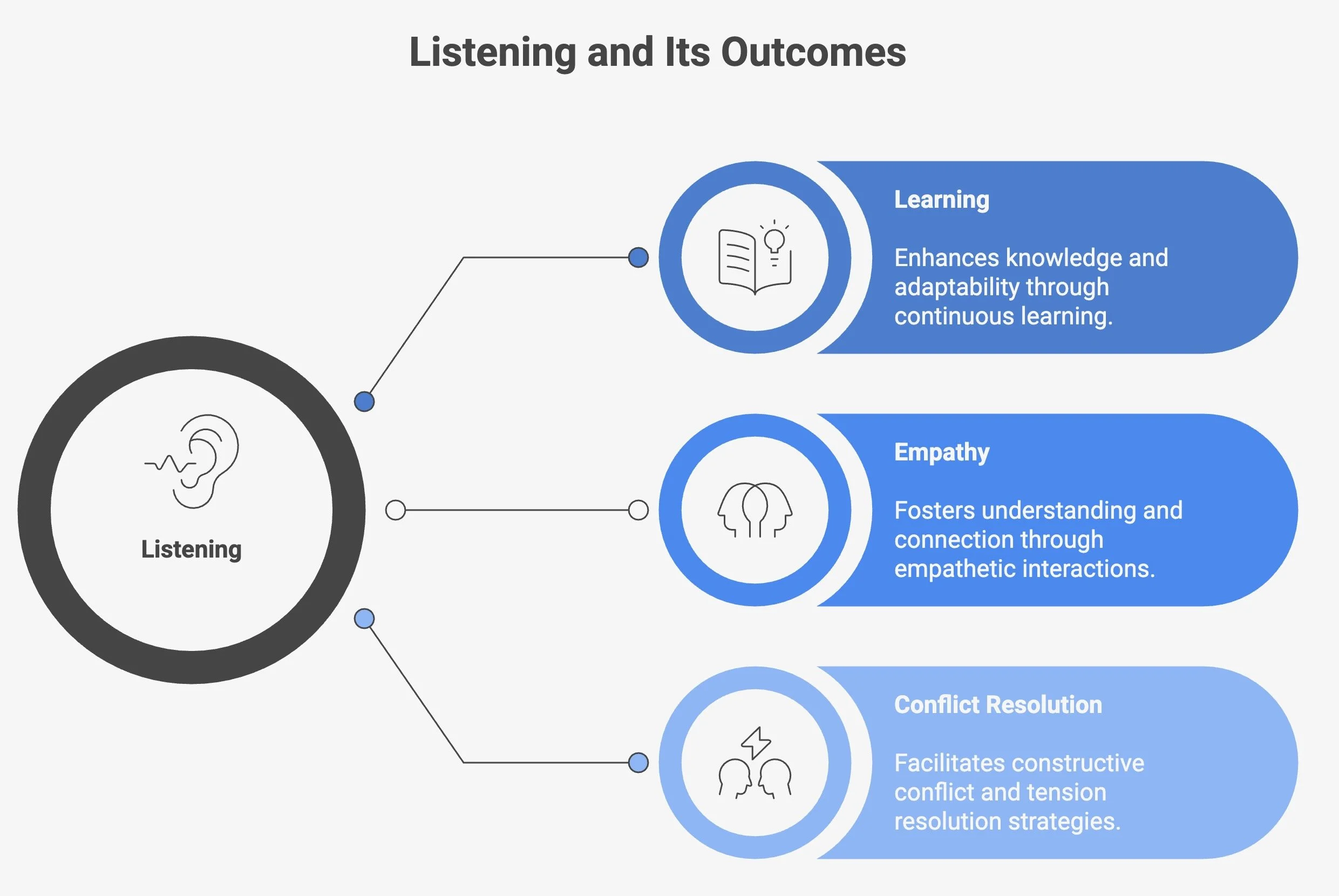
Listening is a “hub” skill, a central ability which both enables and improves other abilities. Listening enables and improves some of the EQ skills which great SEs need to have: learning, empathy, and conflict resolution
Curious Learning
“We show solutions, not features.”
Companies don’t want shiny “features” on the shelf to gape at. More stuff, even cool stuff, does not necessarily fix our issues. The “right” stuff solves problems: targeted interventions / focused deliverables / personalized solutions. Without understanding our client’s real needs, we can quickly become “Solution” hawkers in search of a problem.
The foundation of every lasting resolution is “knowledge of the problem”. Understanding the problem (pains, inefficiencies, failures) is the all-important starting place. In the SaaS world, “knowledge of the problem” is gained through the Discovery phase (“disco”), and the core of Discovery is deep learning.
Curious learners are genuinely interested in knowing the viewpoints, needs, and desired outcomes of others. During Discovery, this means making sure you understand clients and their companies as much as possible before showing any solution. During a software Demo, this looks like pausing when you get the sense that there is confusion to ask clarifying questions.
The best SEs are people who love learning for learning’s sake, people who are genuinely curious about your business’s digital processes, your company’s idiosyncracies, and your COO’s 10-year vision. Clifton StrengthsFinder describes a “learner” as someone who is “energized by the steady and deliberate journey from ignorance to competence.” Great learners get to the core of problems – the only place from which “Solution Builders” can truly begin.

Empathy
SEs often talk to clients who are struggling. Some struggle with frustrating processes (e.g., the warehouse manager who had to touch every skid in the warehouse to find the one he needed to ship, which may be AWOL because the night shift sent it out two months ago and did not record it). Others face anxious futures (they know what they're doing is unsustainable).
The core challenge is to acknowledge the other person’s “emotional iceburg”, understanding that many things exist under their surface. When some clients feel fear, and they express it with aggression. Some feel doubt and struggle to believe their solution will be properly “configured in implementation". Others are worried the software replace some of their functions, making them less valuable to the company. Clients don’t want to be told, "Everything will work out just fine".
Great SEs see and meet those emotions in clients. People (especially the worried and exhausted) need to feel heard and feel hope. Both listening to and inspiring others require empathy, the ability to understand and engage helpfully with someone else's emotional state. SEs are not therapists; however, listening deeply to clients can give them the requisite trust to move forward with a solution that will ultimately help them.

Conflict Resolution
“To be in leadership is to be in conflict”.
Nobody ever accomplished something important without resolving conflict. Companies do not purchase and implement ERP (a heroic endeavor) without conflict, either. Even if a particuklar sales cycle never gets "heated”, objections and concerns will come up. No matter the source of the tension, SEs need to "build the bridge” forward, and do what they came to do in a professional and effective a way
Sometimes things do get heated. A Presales Leader SE once had a member of the prospect's ops team audibly complaining about his presentation style, using some choice words. After some time had passed, and the rudeness hadn’t stopped, our SE said in a jovial tone, "Clearly this isn't going very well. Have I done something to offend you?" The prospect’s team member was off-balance, stammered out an apology, and let our SE finish the Demo in peace.
Handling conflict directly and professionally is challenging, but can be done. In the above case, what could have been a disaster ended up being a productive call! It's a challenge to ride the waves of other people's emotions without getting caught up in them yourself, especially on a challenging or combative demo. A good presales engineer can hear and feel tension, while remaining a non-anxious presence – even when they’re under fire! They function like a control rod in a nuclear reactor – consistently bringing balance. If the SE gets caught up in the conflict, nothing will stop the vicious cycle. But if they can listen, remain calm, understand the conflict, address it, and show a path forward, then they are truly great.

And so, “Above all, listen to each other deeply, for listening enables a multitude of other skills.” - Attribution Unknown.
This article was inspired/co-authored by Presales Leader SEs. Much of the content was generated by their responses to the question: “What EQ skills are most important for SEs?”
TL;DR — Most Important EQ Skills for SEs
Listening: The core skill. Great SEs pick up both spoken and unspoken cues to understand real needs.
Curious Learning: They dig into processes, pains, and goals before showing solutions — learning drives accuracy.
Empathy: They recognize the emotional “iceberg” behind client frustration, fear, or confusion, helping people feel understood.
Conflict Resolution: They stay calm under pressure, defuse tension, and guide conversations forward without getting pulled into the heat.
Master these four, and the technical skills matter more — and land better.
EQ (Emotional Quotient) - This is the ability to recognize, understand, and manage one's own emotions, as well as those of others.
High EQ is linked to: Stronger relationships, better leadership skills, improved problem-solving, and greater overall well-being.
Involves: Using nonverbal cues to read emotions and responding effectively to different situations.