Losing Your Prospect From the Start - Part I
Not Listening
〰️
Bad Impressions
〰️
Lollygagging
〰️
Being "Salesy"
〰️
Déjà Vu
〰️
Not Listening 〰️ Bad Impressions 〰️ Lollygagging 〰️ Being "Salesy" 〰️ Déjà Vu 〰️
Losing From the Start
“How does an SE lose a prospect from the start?”
I asked this question to our presales Solution Engineers (SEs). A seasoned SE responded: "How shall I count the ways..."
Presales is challenging:
Businesses have unique needs.
Products are expensive and complicated.
Competition is relentless.
Many stakeholders can be involved.
In short, there are many ways to lose a prospect. In fact, there are so many ways to negatively affect your chances of closing with a given prospect that we’ll explore this topic in a series of blog posts. This first blog focuses on common interpersonal errors that lead prospects to walk away from buying opportunities.
Shifting Prospect Confidence
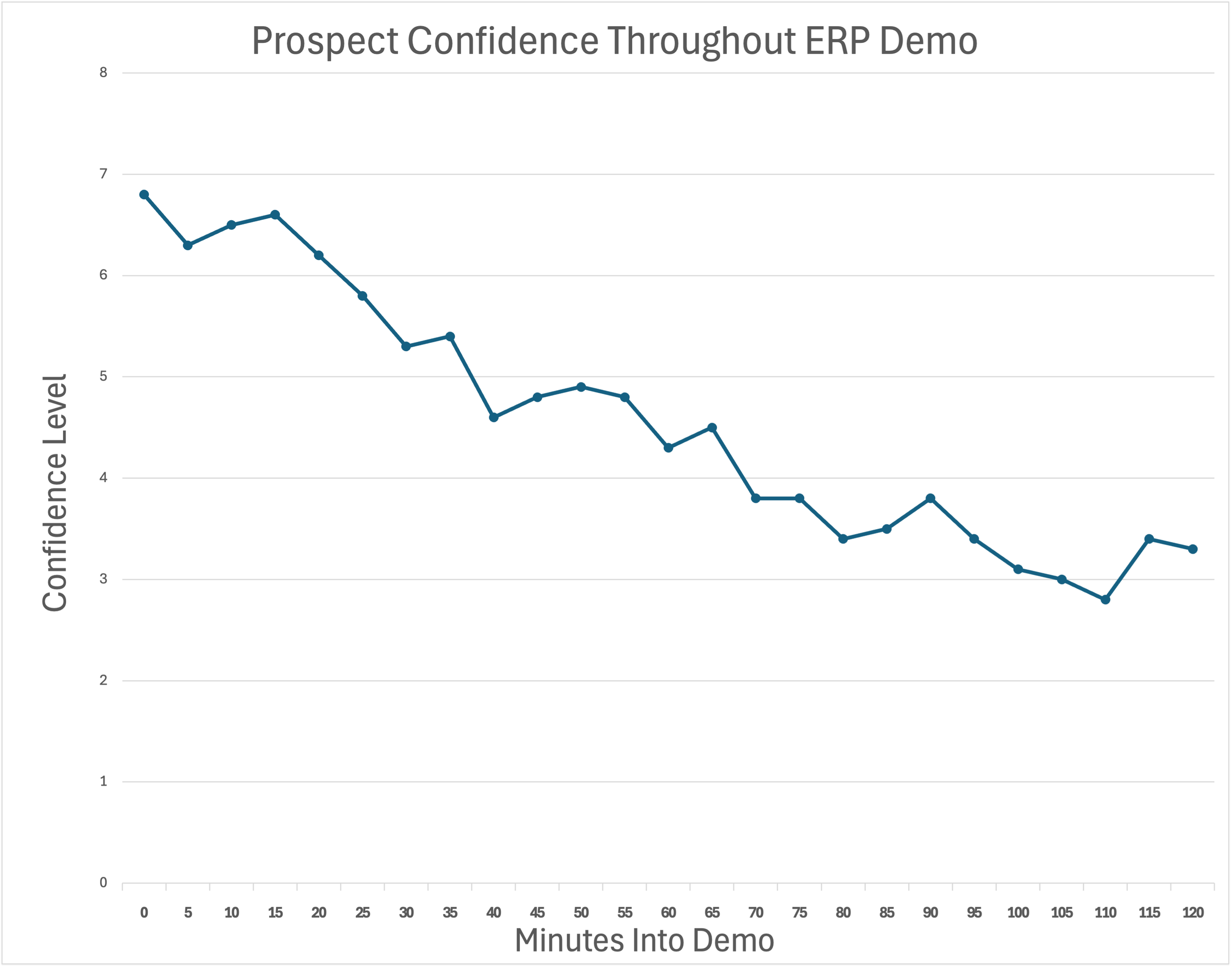
Every prospect enters a demo with a baseline level of confidence. They may feel confident from the outset that the solution will be a good fit for their organization’s needs. Alternatively, they may arrive skeptical, assuming the solution is not a good fit for their company.
Once the demo begins, the clock starts ticking. The prospect begins observing—and forming impressions of—both the Solution Engineer(s) and the product itself. These impressions evolve minute by minute. Before long, the prospect’s confidence level will either rise or fall based on what they see, hear, and experience.
Prospect confidence is critical. When the demo and the SEs build confidence, the prospect is more likely to move forward with a purchase. When confidence erodes, the probability of purchase decreases dramatically.
Each misstep below reduces prospect confidence. Avoid these errors, and your prospects will leave demos feeling more prepared—and more willing—to take the leap with your solution.
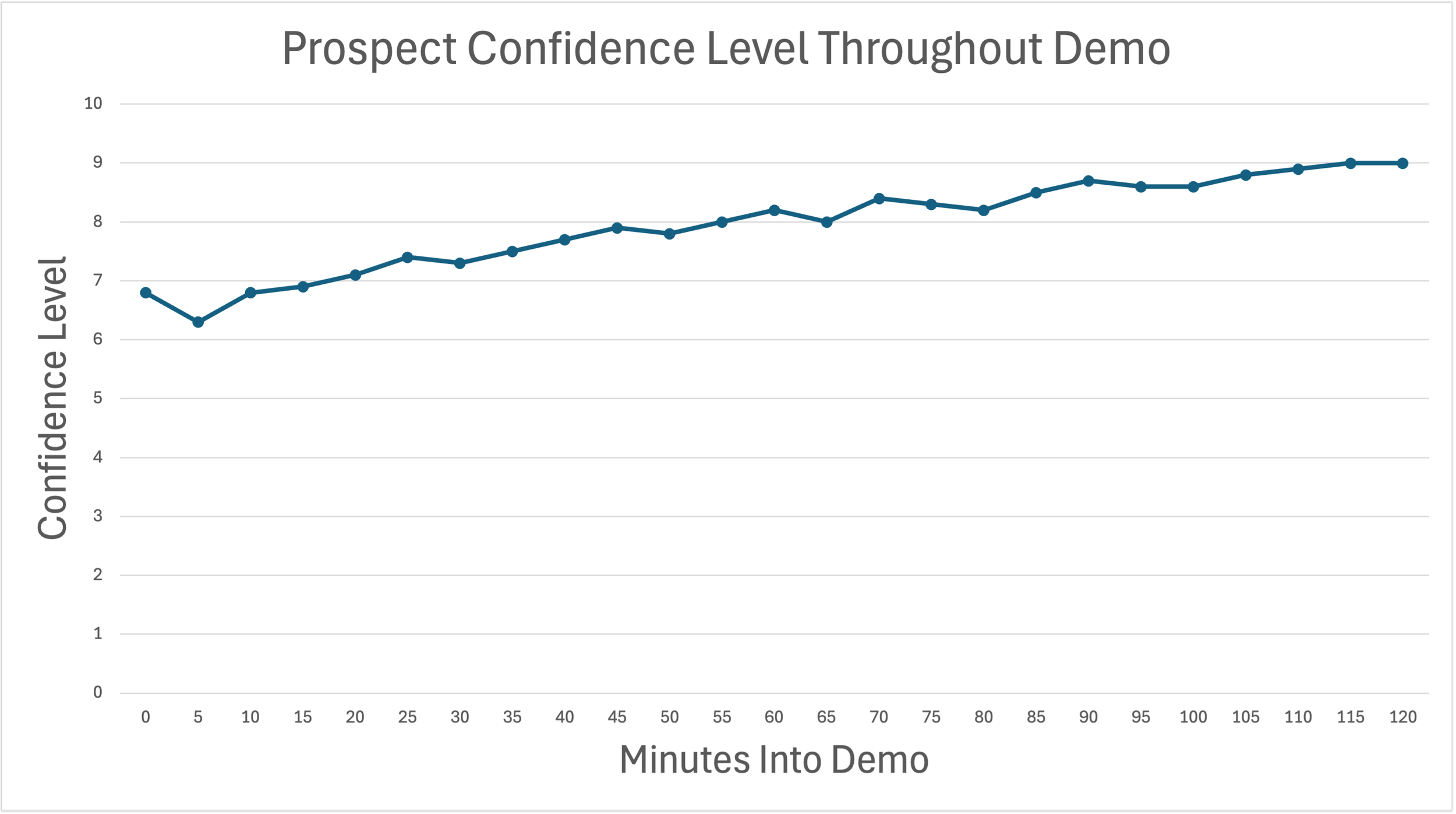
Errors Which Erode Prospect Confidence
Error #1: Not Listening
There are several ways to “not listen”. Here are a few of them:
Not listening deeply to a prospect's needs.
Talking over or interrupting a prospect when you're conversing.
Talking about yourself or your company too much.
Error #2: Bad Impressions
How you come across matters to a prospect’s buying process. If they don’t like you, it doesn’t matter how good the software is.
One of the fastest ways to lose a prospect is by coming across as arrogant. When a prospect dislikes you, they disengage—and may even go directly to Acumatica to request a new partner. One of the most common complaints from dissatisfied prospects is that their previous VAR was arrogant.
Another quick way to make a bad impression is to be lazy. Not knowing what a prospect does before a Discovery call signals a lack of preparation. If you open a call with, “So, what do you guys do?” you’ve already lost ground. If you have high-level notes from an introductory call with Acumatica, invest the effort to develop more targeted, thoughtful follow-up questions. Asking the same basic questions again communicates disinterest and wastes the prospect’s time.
Error #3: Lollygagging
Don’t take five days to answer a prospect’s email.
Error #4: Being “Salesy”
Coming across as “salesy” is a red flag for prospects. Prospects won’t trust the recommendations of an overly sales-focused SE because they know that “salesy” SEs are usually pushing a single solution regardless of fit.
Prospects want to be heard and shown solutions that will genuinely address their pain points. SEs need to become the trusted advisor in the sales cycle. How do you get there? By asking excellent questions during Discovery, listening intently, uncovering their true needs, and demoing relevant solutions. Prospects can tell who is being “salesy” and who is genuinely trying to bring them value. Strong SEs sell best by demonstrating relevant features and functions that address the prospect's primary pain points.
Error #5: Irrelevance
Show only what is immediately relevant. Demonstrating features a prospect doesn’t need to see—even impressive ones—can be counterproductive. Irrelevant content can create confusion, raise unnecessary questions, and gum up the flow of the demo.
Error #6: Ignorance
Claiming “we know your business” before actually listening to the prospect describe their business is a reliable way to alienate them. It signals a lack of curiosity and relational awareness.
A better approach is to establish credibility without overreaching, for example: “We know your industry and understand that every [industry] business has unique needs and processes.”
Similarly, claiming expertise in a category the prospect doesn’t identify with can backfire. For instance, saying “We’re experts in t-shirt printing” may frustrate a prospect who manufactures the shirts, prints on hard goods, or produces books and catalogs. From their perspective, this statement demonstrates a shallow understanding of their industry. What was intended as a display of competence becomes evidence of incompetence.
Error #7: Déjà Vu
Bringing new participants into the process who haven’t thoroughly reviewed the briefing notes is another common mistake. These newcomers often repeat questions the prospect has already answered. This repetition is frustrating and exhausting. Prospects want to see progress—not rehashed conversations and familiar questions delivered by a new face.
So, How Can SEs Increase Prospect Confidence?
Start with a plan.
SEs present complex, high-dollar solutions. Arriving with a clear roadmap, which shows how you’ll guide the prospect through their evaluation. This is a critical first step toward building trust and confidence.
TL;DR
Interpersonal presales errors which erode prospect’s confidence:
Not Listening: Interrupting, talking over prospects, or focusing too much on yourself instead of deeply understanding their needs.
Bad Impressions: Arrogance or lack of preparation quickly erodes trust; prospects expect respect, humility, and homework before Discovery.
Lollygagging: Slow responses—especially to emails—signal disinterest and can kill momentum.
Salesiness: Overly salesy behavior undermines credibility; great SEs act as trusted advisors focused on real outcomes.
Irrelevance: Showing features that aren’t immediately relevant creates confusion and derails the demo.
Ignorance: Claiming to “know their business” too broadly or inaccurately alienates prospects and exposes shallow understanding.
Déjà Vu: Introducing new team members who repeat already-answered questions frustrates prospects and stalls progress.