Mastering Presales with StoryBrand Principles
Presales and Storytelling
Great stories follow a predictable sequence. Blockbuster films, classic novels, and ancient myths have much of the same “DNA”. The StoryBrand Framework, a 7-part storytelling structure, makes this sequence very easy to understand. The framework goes like this:
A Character has a Problem and meets a Guide who gives them a Plan and calls them to Action, which leads them to Success and helps them avoid Failure.
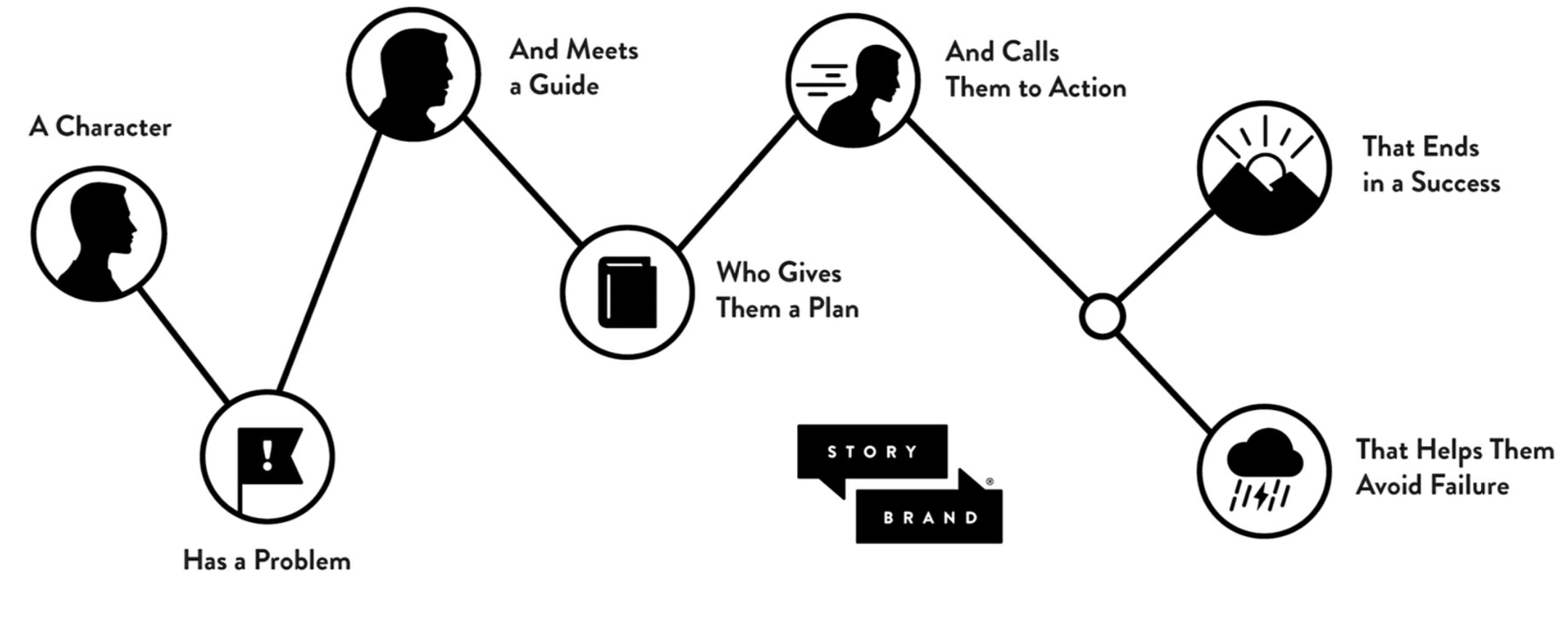
7-Part Story Brand Framework
While this framework is used most commonly for marketing strategy, it can also serve as a compass for Presales professionals. Keeping all seven parts in mind helps a Solution Engineer (SE) navigate a complex sales cycle. However, the first four parts are most relevant to SEs during the Presales process. Here is how SEs can apply the first four pillars of StoryBrand to their presales strategy to increase their success rate.
StoryBrand Framework & Presales Success
1. The Prospect is the Main Character (Not Your Product)
It is a mistake in Presales to think of your software as the hero. This is the same error that companies make when they position their product/service as the “Hero” in marketing collateral. Instead of thinking of your ERP solution as the “Hero”, you need to position the prospect as the main character of this story.
What is interesting to the client is their own narrative. All of us humans are inherently self-referential. Narcissistic or not, we are all the center of our own stories. You, the Guide, are necessary and valuable to their journey. But, you (the SE) are just helping them on their way. Your prospect is the main character, and is hyper-focused on three things:
Their survival: Keeping their job, keeping their company afloat, ect.
Their definition of success: Their goal, their growth, ect.
Their timeline: Past challenges, current uncertainties, future opportunities
To position the prospect as the hero, an SE must constantly answer Three Crucial Questions:
What does the hero want? (What is the ultimate destination?)
Who or what is opposing the hero? (What technical or organizational roadblocks stand in the way?)
What will the hero’s life look like if they do or don’t get what they want? (The stakes of the deal.)
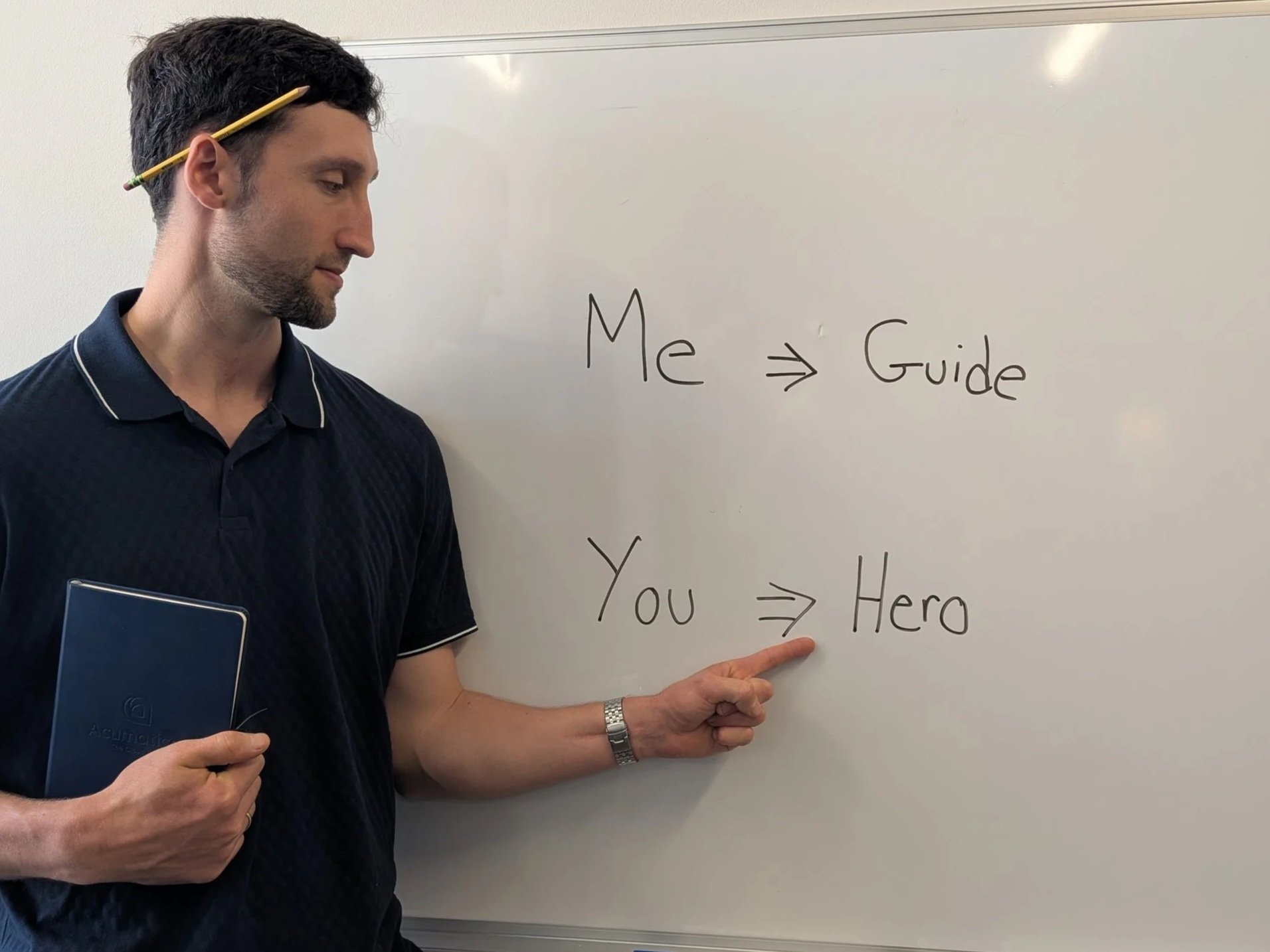
You are the guide… they are the hero!
2. The Prospect Has a Problem
When a prospect (main character) joins a discovery call, they will usually disclose a series of the company’s external problems—surface-level issues. “Our reporting is too slow,” or “We need an API integration here.”
But great SEs (who are familiar with StoryBrand principles) know there are many types of problems. External problems are the ones usually shared first. But other types of problems afflict the hero as well. Great SEs listen for clues about the deeper challenges:
External Problems: The tangible, surface-level roadblock (e.g., "The software crashes").
Internal Problems: How that problem makes them feel (e.g., "I feel stressed because when I experience 'XYZ” problem, I start thinking that I am letting my team down").
Philosophical Problems: Why it’s fundamentally wrong that they have to deal with this (e.g., "In 2026, we shouldn't have to waste 10 hours a week on manual data entry").
When SEs can accurately name and diagnose these deeper, internal problems, the prospect feels understood on an emotional level. Suddenly, you aren't just selling software; you are offering relief from psychological stressors. This relief is tremendously valuable to buyers.
3. You Are The Guide
If the prospect is the main character, you are their compass. You are there to show them the way. You are not there to show off your powers; you are there to help them win.
People with a problem are looking for a way out. They are seeking a good plan and a person who will help them navigate it. But they will not follow someone they do not trust. So, what makes a Guide trustworthy?
Presales Leader has written extensively about the requisite skills of high-quality solution engineers. These are the skills needed to be a great Guide. A Guide must be:
An Empathetic Listener: Tuning into the internal problems behind the technical requirements.
A Curious Learner: Asking the extra question to uncover the true scope of the hero's journey.
A Calm Operator: Radiating authority and competence, even when the discovery gets messy.
As the Guide, your job description changes from "demo presenter" to trusted advisor. You are the one showing them the plan, showing what the future could look like, and giving them confidence that the plan could work!
4. The Software Solution is the Plan
Heroes, though inevitably courageous, are initially often hesitant. Changes are often risky, and moments of transition are moments of vulnerability. This is where your software—and your tailored demonstration—comes in.
The software solution is the plan. The plan can be challenging. The plan can be costly. But the hero will take the leap if they believe the plan can eventually work. Your demo must clearly show your plan (your software) can lead them through their current challenges and into greener pastures.
Solutions Engineers Pave The Way
Technically, the final three parts of the StoryBrand framework (Calls to Action, Success, and Avoiding Failure) fall into the purview of Account Executives and Customer Success.
However, the SE still has a role to plan in these. By discussing the plan clearly, intelligently, and with the prospect’s unique context in mind, you give the prospect the experience, courage, and confidence to go for it.
When a prospect feels understood by a technical expert, it creates a powerful catalyzing effect. Confidence in the heart of a prospect is what transforms a hesitant buyer into an internal champion. Stop being the hero of your demos and start being the Guide. When the prospects are treated like the hero, they are more likely to choose your plan to lead them into the future.
TL;DR
The StoryBrand Framework helps Solution Engineers (SEs) navigate sales cycles by treating the prospect—not the software—as the main character.
Here is how its first four pillars apply to presales:
The Prospect is the Hero: Buyers are focused on their own survival, timeline, and success. SEs must prioritize what the buyer wants and what roadblocks oppose them.
Identify Deeper Problems: Prospects usually state surface-level "external" problems. Great SEs also diagnose "internal" (emotional) and "philosophical" problems to make buyers feel truly understood.
The SE is the Guide: You are a trusted advisor—an empathetic listener and calm operator—whose job is to help the prospect win.
The Software is the Plan: Because change feels risky, your tailored demo must prove the software is a viable plan to overcome their challenges.
By diagnosing these deeper problems and presenting a clear plan, the SE acts as a guide who gives the buyer the courage and confidence to take action